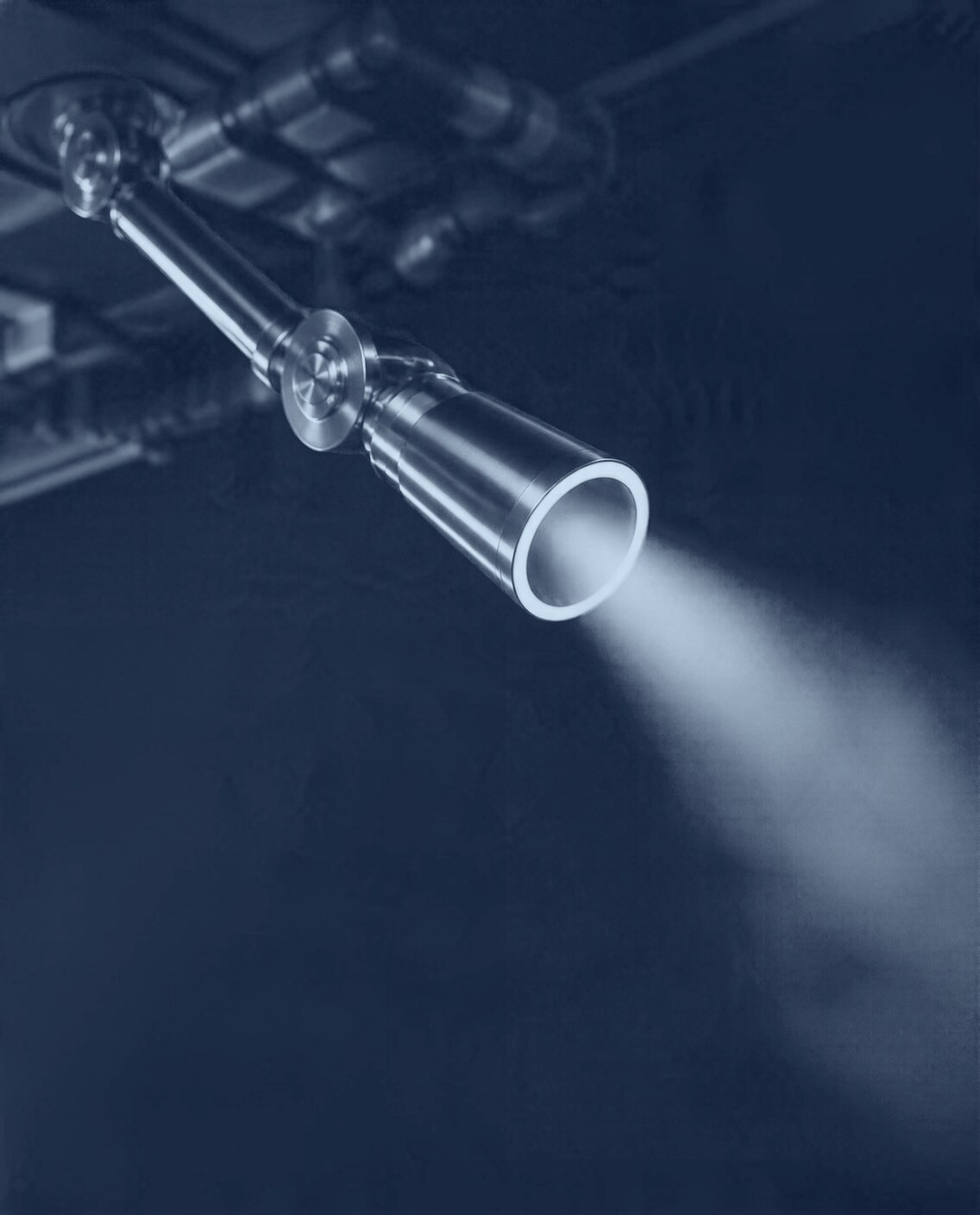
Start with the room, not the product. Two numbers decide everything: the height of the nozzle above the occupied zone, and the distance to the farthest person it must reach. Together they give the required throw: how far the jet must travel before its velocity decays to terminal velocity, the speed below which a person stops feeling it as a draft. Half a metre per second is the usual reference.
Throw scales with airflow and with nozzle size. More air travels further, and a larger throat at the same velocity carries more momentum and holds the column together longer. This is why oversized nozzles throttled down at commissioning underperform: velocity falls, the column loses the momentum that carried it, and the far seats sit in still air. Size the nozzle for the airflow the system will actually run, not the catalogue maximum.
The method in four steps. Fix the occupied-zone height and the farthest-seat distance. Choose the terminal velocity the space can tolerate; a theatre is fussier than a factory. Select a nozzle whose throw at your airflow covers the distance with margin. Then check noise, because a jet that reaches the last row loudly has failed anyway; if the noise criterion climbs, go one size up in diameter and down in velocity.
Mounting changes the answer: ceiling, exposed-duct and wall-mounted nozzles decay differently because of the surfaces around them, so read throw data matched to your mounting. The number that matters is throw measured at your flow, at your mounting, which is why throw reports are asked for with the order on serious projects.